1
Friday · before sunset
Light candles
Two candles and one short blessing. For many people, this is the whole of Shabbat, and it is enough to mark the week.
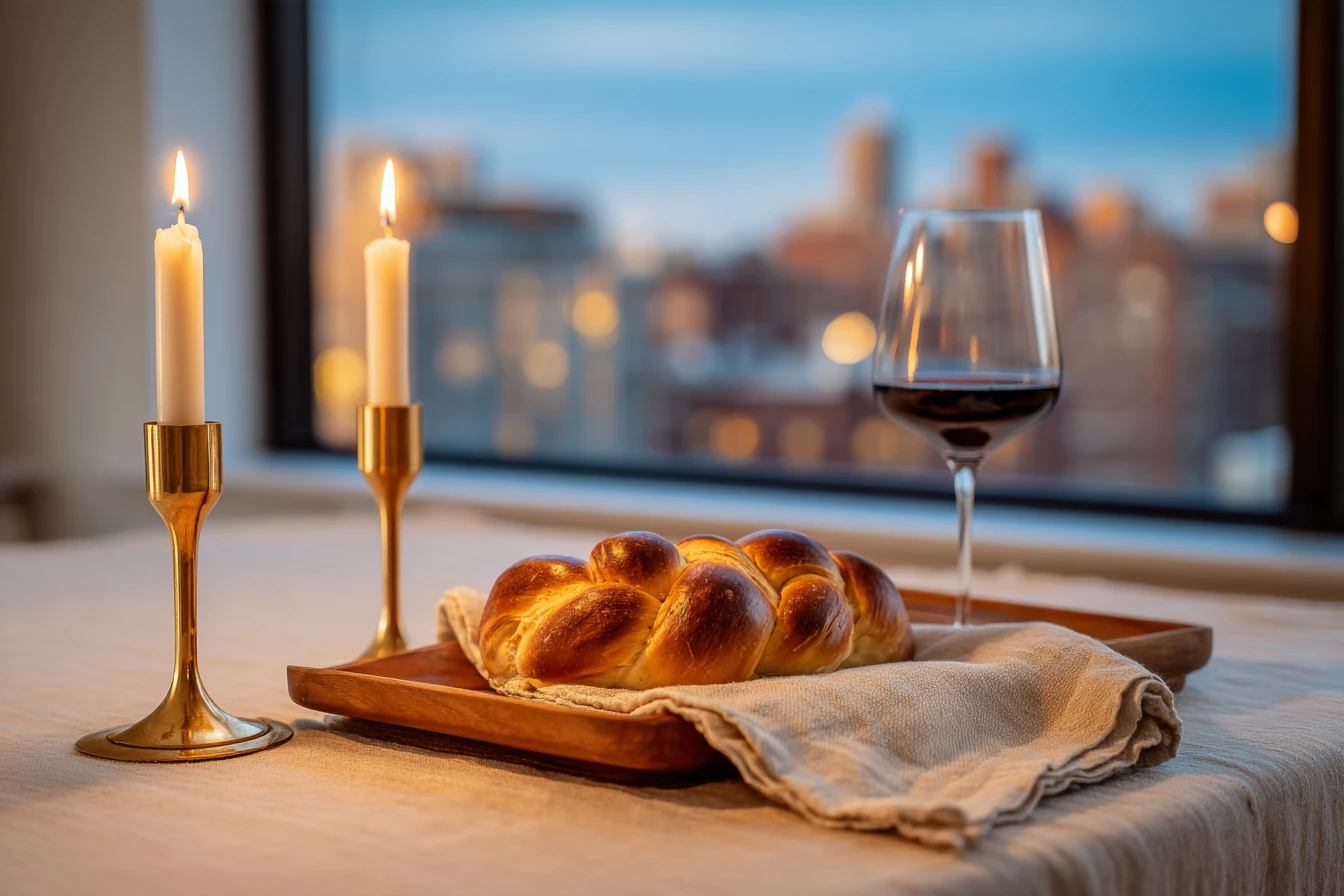
Shabbat is the Jewish day of rest, from Friday sunset to Saturday nightfall, marked at home with candles, wine and a meal.
“For about 25 hours every week, from Friday before sunset to Saturday after dark, Jewish tradition says the work can wait.”
Shabbat is the Jewish day of rest. It begins on Friday about 18 minutes before sunset, when candles are lit, and ends on Saturday night once three stars are out, about 25 hours later. People mark it with a blessing over wine, a meal with family or friends, synagogue, and time away from work.
Shabbat (shah-BAHT) comes from a Hebrew root meaning to stop, or to rest.
Shabbat shalom (shah-BAHT shah-LOHM) means a peaceful Shabbat, and it’s what people say from Friday afternoon until it ends. What Shabbat Shalom means
One Shabbat lasts about 25 hours, every seventh day.
Six days for work. One that isn’t.
Shabbat begins 18 minutes before sunset on Friday, when the candles are lit. It ends on Saturday night when three stars are out, about 40 to 70 minutes after sunset depending on where you live.
The times move with the seasons. In New York, candles are lit after 8 PM in June and before 4:15 PM in December, so it’s worth checking each week.
Candles 18 minutes before sunset. Shabbat ends when the sun is 8.5° below the horizon. Times are for the city centre.
There is no single way to keep Shabbat. These are the things people do, in the order the day unfolds. Many start with the first two and add the rest over time.
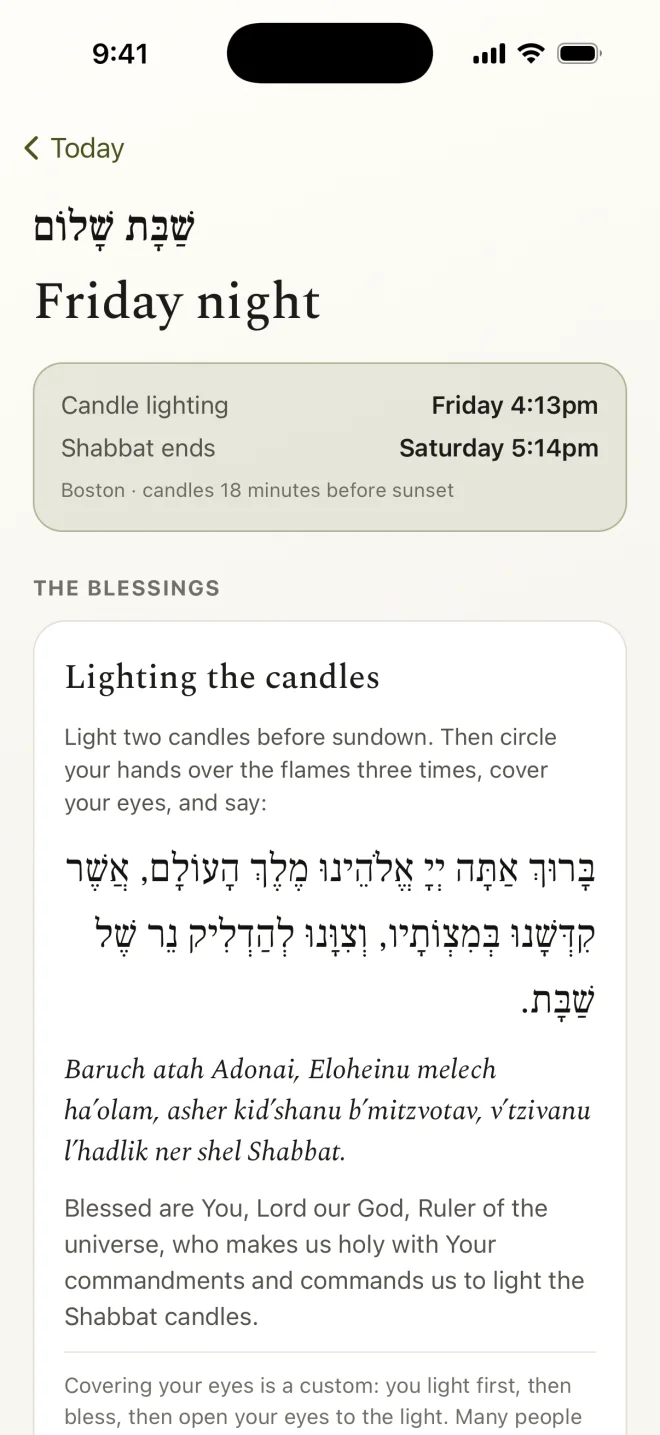
Two candles and one short blessing. For many people, this is the whole of Shabbat, and it is enough to mark the week.
A blessing over wine (kiddush) and one over bread (challah), then a long meal with family or friends.
Friday evening services welcome Shabbat in. On Saturday morning, the week’s Torah portion is read aloud from the scroll.
Observant Jews set aside 39 kinds of creative work, which rules out cooking, writing, driving and screens. Many others keep a lighter version: a phone-free dinner, a slow Saturday.
Wine, sweet spices and a braided candle say goodbye to Shabbat and open the new week.
This page describes what Jews do and why, not what you must do. Practice differs between families and communities; for your own, ask a rabbi you trust.
And the heaven and the earth were finished, and all the host of them.
וַיְכֻלּוּ הַשָּׁמַיִם וְהָאָרֶץ וְכָל־צְבָאָם׃
And on the seventh day God finished His work which He had made; and He rested on the seventh day from all His work which He had made.
וַיְכַל אֱלֹהִים בַּיּוֹם הַשְּׁבִיעִי מְלַאכְתּוֹ אֲשֶׁר עָשָׂה וַיִּשְׁבֹּת בַּיּוֹם הַשְּׁבִיעִי מִכָּל־מְלַאכְתּוֹ אֲשֶׁר עָשָׂה׃
And God blessed the seventh day, and hallowed it; because that in it He rested from all His work which God in creating had made.
וַיְבָרֶךְ אֱלֹהִים אֶת־יוֹם הַשְּׁבִיעִי וַיְקַדֵּשׁ אֹתוֹ כִּי בוֹ שָׁבַת מִכָּל־מְלַאכְתּוֹ אֲשֶׁר־בָּרָא אֱלֹהִים לַעֲשׂוֹת׃
Remember the sabbath day, to keep it holy.
זָכוֹר אֶת־יוֹם הַשַּׁבָּת לְקַדְּשׁוֹ
Six days shalt thou labour, and do all thy work;
שֵׁשֶׁת יָמִים תַּעֲבֹד וְעָשִׂיתָ כָּל־מְלַאכְתֶּךָ
but the seventh day is a sabbath unto the LORD thy God, in it thou shalt not do any manner of work, thou, nor thy son, nor thy daughter, nor thy man-servant, nor thy maid-servant, nor thy cattle, nor thy stranger that is within thy gates;
וְיוֹם הַשְּׁבִיעִי שַׁבָּת לַיהוָה אֱלֹהֶיךָ לֹא־תַעֲשֶׂה כָל־מְלָאכָה אַתָּה וּבִנְךָ־וּבִתֶּךָ עַבְדְּךָ וַאֲמָתְךָ וּבְהֶמְתֶּךָ וְגֵרְךָ אֲשֶׁר בִּשְׁעָרֶיךָ
for in six days the LORD made heaven and earth, the sea, and all that in them is, and rested on the seventh day; wherefore the LORD blessed the sabbath day, and hallowed it.
כִּי שֵׁשֶׁת־יָמִים עָשָׂה יְהוָה אֶת־הַשָּׁמַיִם וְאֶת־הָאָרֶץ אֶת־הַיָּם וְאֶת־כָּל־אֲשֶׁר־בָּם וַיָּנַח בַּיּוֹם הַשְּׁבִיעִי עַל־כֵּן בֵּרַךְ יְהוָה אֶת־יוֹם הַשַּׁבָּת וַיְקַדְּשֵׁהוּ׃
English: The Holy Scriptures, Jewish Publication Society, 1917 (public domain). Hebrew: Tanach with Nikkud. Via Sefaria.
The Hebrew name as spoken in Israel and by most Sephardi Jews. The most common spelling in English today.
The Ashkenazi and Yiddish pronunciation of the same word, common in Orthodox communities. “Good Shabbos” is the greeting.
The English word, used in older translations, including the 1917 verses above. It means the same day.
You need two candles, something to drink, bread, and about ten minutes before sunset on Friday.
Candle lighting and Havdalah for this week and the next eight.
Candles, wine and challah, in Hebrew, transliteration and English.
How to say it, what it means, and when people use it.
What happens, in order, and what to bring as a guest.
Wine, sweet spices and a braided candle to close Shabbat and open the week.
For kids, for guests, and one from this week’s Torah portion.
Yes. It comes every Friday evening and ends every Saturday night, all year round. When a holiday falls on Shabbat, the two are kept together.
“Shabbat shalom” (shah-BAHT shah-LOHM), a peaceful Shabbat. Many Ashkenazi Jews say “Good Shabbos.” On Saturday night, once Shabbat ends, people say “Shavua tov” (shah-VOO-ah TOHV), a good week.
Observant Jews don’t drive, cook, write or use phones on Shabbat, because these count among the kinds of work the day sets aside. Many Reform and Conservative Jews do drive, often to synagogue or to family.
It’s a margin. Lighting a little early makes sure the candles are lit before Shabbat begins, and adds a few minutes to the day. In Jerusalem the custom is 40 minutes.
Observant communities keep Shabbat as one whole day. Many Jews start with one part, like candles and dinner on Friday, and add more over time. For guidance on your own practice, a rabbi is the person to ask.